How to make a restaurant risk management plan
The goal of your risk management plan is to identify and monitor risks whilst proactively preventing risks.
Follow these 6 easy steps to develop your own risk management plan:
1. Identify your risks
Carry out a site audit to identify any potential risks. Include your teams in this process as they will have unique insights and experiences.
2. Analyse the risks
Use a scale to estimate the probability of the risk occurring and the severity of the impact. Also consider the consequences for the business.
3. Identify triggers
Ask your team members to identify the warning signs for each risk. When you are aware of the triggers, you can prevent the problem from happening.
4. Implement safety measures
Brainstorm solutions and implement safety measures to prevent risks occurring and escalating.
5. Make team members accountable
Assign each risk to an owner, that way people will take responsibility and be more likely to take action.
6. Monitor the measures
Continuously evaluate the effectiveness of the safety measures.
Risk management plan template
A risk management plan template is a framework to help you identify the risks, record the risks and assess the potential impact.
Need a helping hand? Here’s a free risk management plan template to help you get started.
Looking for an easier way to manage risk?
While paper templates are a good place to start, they take time and are hard to keep track of.
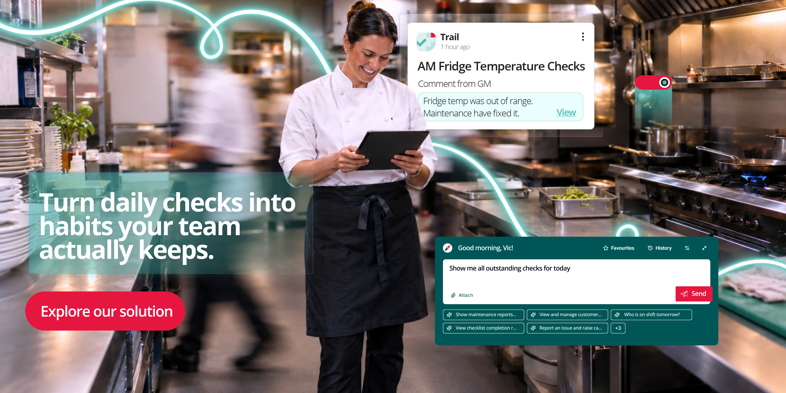
Trail is a powerful app that helps you proactively manage risks in your business. Trail helps:
Make safety a habit – Checklists and forms are designed for speed and simplicity, woven into your team's working day. Trail prompts the right person to do the right task at the right time, so you know critical tasks are done.
Avoid incidents – Trail’s smart tasks automatically alert you if something isn’t right. Attach photos and comments to tasks to prove the right corrective action was taken to protect your customers, teams and business.
Drive accountability– Trail is a complete historical record of all activity, time and date stamped with photos and comments attached where needed. So you can drive accountability and confidently prove your compliance.
Performance visibility – Get insights on your productivity, compliance and more. Dashboards and daily reports highlight issues, so they can be resolved quickly without the need for time-consuming and expensive audits.