The importance of a cleaning schedule in restaurants
Put simply, cleanliness and hygiene are non-negotiables for restaurants. They not only ensure that food is safe for customers to eat, but also support the message behind your brand that you care about your customers.
The bottom line is, if your premises aren’t up to muster, customers will vote with their feet and go elsewhere. There’s a lot to manage and keep track of; and it’s not just about doing the tasks, it’s also important to document that they are being done. If you’re still using paper records, this can cause all kinds of headaches.
Juggling everything that needs to be done across the different areas of the business, from the kitchen to front of house, needs to be done efficiently and effectively. If one action is missed and standards are breached, it can make the difference between a pass and a fail on your next EHO visit. That’s why checklists are such a good idea.
Having a clean and hygienic restaurant is essential for food safety. It makes sure that surfaces are free from germs and bacteria, and also reduces the risk of cross contamination which is especially important for customers with food allergies. Food must be prepared to stringent food safety standards and any business which fails to do this runs the risk of an inspection by Environmental Health, a forced closure, costly changes and, potentially, a hefty fine.
Daily, weekly or monthly? Who, what and when?
So, it’s clear that when it comes to cleanliness in hospitality, you need to have a thorough process in place, and some tasks involve more than a quick spray and wipe down with a cloth. In busy restaurant kitchens, professional cleaning products and equipment will need to be used.
There’s a duty of care towards staff to ensure that they don’t come to harm as a result of using chemicals or specialist equipment so training is key. This is especially important to note in cases of sickness absence. Do you have a member of staff available to cover who is trained, and therefore safe to clean down ovens if the person who usually does it is absent?
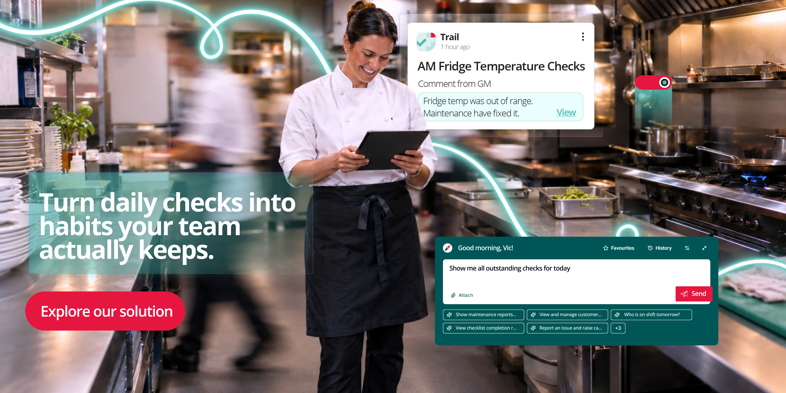
Equipment and surfaces will have to be cleaned at different stages of use. The lists below are not exhaustive, but give an idea of the type of checks that should be carried out and when. It’s a lot to organise, and no manager can be in five places at once, and if you’re finding yourself getting bogged down and overwhelmed with lots of paperwork, then the Trail app can condense all this together and enable managers to delegate tasks and check back when they’ve been completed.
Restaurant Daily cleaning schedule:
- All used utensils, plates etc should be run through the dishwasher and stowed away
- Empty all bins, wipe down and replace with clean liners
- Clean toilet areas (ideally, these areas should be checked hourly during opening times), restock toilet paper and soap
- Wipe down food prep areas
- Vacuum and mop floors
- Empty and clean grease traps
- Scrub down stove tops, microwaves and grills
- Disinfect sinks
- Wipe down chairs and tables
- Clean down coffee makers
Restaurant weekly cleaning schedule:
- Sanitise fridge and freezer shelves, doors and handles
- Clean out deep fryers
- Dust bar areas
- Clean mirrors and buff glass panels in doors
Restaurant Monthly cleaning schedule:
- Check ceilings for cobwebs
- Assess furniture and fittings. Are any repairs needed?
- Give walls and furnishings a thorough dusting and vacuuming
How can you keep on top of your cleaning schedule?
Maintaining a consistent cleaning schedule in a restaurant environment can seem like a daunting task. With so many moving parts, it's easy for key cleaning duties to slip through the cracks. However, the consequences of neglecting cleanliness can be severe, from health code violations to a tarnished reputation. So, how do you stay on top of it all?
The key to success lies in organisation, delegation, and accountability. First, break down tasks by frequency-daily, weekly, and monthly-so that staff members are clear on what needs to be done and when. Having detailed, paperless checklists in place ensures everyone is on the same page and that no task is overlooked. Assign specific responsibilities to individuals or teams, making them accountable for their designated cleaning duties. This can create a sense of ownership and pride in maintaining a clean and safe environment for both customers and coworkers.
Consistency is another crucial element. Sticking to your schedule ensures that cleaning doesn’t become reactive and only addressed when problems arise. Instead, make cleaning part of your restaurant’s routine, preventing the buildup of dirt, grease, or potential hazards over time.
Moreover, regular inspections and monitoring can help keep everyone on track. Spot checks by managers or team leaders can reinforce the importance of maintaining cleanliness standards and ensure that all areas are being properly addressed.
In busy periods, it’s easy for cleaning to take a back seat to other priorities. But by using tools like Trail’s app to streamline the process, managers can keep their finger on the pulse of daily operations without getting bogged down by manual oversight.
How can Trail help?
Our restaurant cleaning schedule template is the only tool you need to manage all restaurant cleaning jobs from the palm of your hand. Our simple app allows you to share checklists of duties with your teams, ensuring that nothing is missed.
With all routine restaurant cleaning tasks listed, you can delegate duties and have full visibility of when they are completed and by whom. This allocates responsibility to key staff helping improve standards.
- Instant set up
- EHO approved templates
- Cancel anytime
Ready to take your first step towards a paperless restaurant cleaning schedule?
In this article, we’ve looked at why it’s important to have an effective schedule that clearly sets out tasks and checks to keep your venue looking its best. Ultimately, we recommend that tasks should only be completed as set out in the schedule and not done earlier or later, in order to keep a sense of routine and not lose track.
Trail’s business-focussed solutions are designed to complement the requirements of running a restaurant, freeing up time to ensure all areas of your business run well and serve well.
If you’re interested in how Trail could meet the needs of your restaurant’s cleaning schedule, get in touch with us today.