Understand where your energy is being spent first
Before diving into how to save energy, it’s crucial to understand where your energy is being spent. Pubs, restaurants and hotels typically use significant energy in areas like lighting, refrigeration and heating. Lighting, for example, can account for a large portion of your energy bill, especially if traditional bulbs are still in use. Refrigeration is another critical area; keeping drinks cold is essential, but inefficient systems can lead to unnecessary waste, which is another reason why fridge and freezer temperature checks are so important. Managing your heating and cooling systems effectively checks is also vital for maintaining a comfortable environment for your guests.
Identifying energy-wasting habits and inefficiencies in these areas is the first step toward reducing costs. Regular monitoring of your energy use can provide valuable insights into how to optimise consumption over time.
So, what are some other steps you can take?
Reducing energy consumption in hospitality
The cost of living crisis has had a huge impact on hospitality, and it’s clear that energy consumption features heavily in the list of top challenges facing the hospitality industry right now. So, what can you do about it?
1. Conduct an energy audit
Dig out your old energy bills or use an energy tracking tool to get an idea of how much energy you are currently using, how much it costs and where you’re wasting it.
Carbon Statement provides weekly energy usage and carbon reporting. They report the cost of energy usage and highlight areas of energy waste and associated costs. These reports generate actions to cut costs and eliminate energy waste.
We loved what Carbon Statement was doing so much that we teamed up to help deliver those actions to the teams on site. Trail’s integrations incorporate these actions into your day-to-day operation to increase results and systemise sustainability - discover how.
2. Switch to energy-efficient lighting
LED bulbs use about 75-80% less energy than traditional light bulbs. So, next time you replace your bulbs, make the switch to LED. Not only will it help you cut costs, but you’ll help the environment by reducing greenhouse gas emissions.
3. Turn down your thermostat
Turning your thermostat down by even 1°C could help you make big savings! So set reminders to turn down the heating or you could invest in a smart thermostat to do it for you. Switching to a smart thermostat can reduce your heating and cooling costs by up to 8% by adjusting temperatures based on occupancy. If the initial investment feels daunting, consider the long-term savings and enhanced control over your energy use.
4. Train up team members
The best way to save energy is to get buy-in from your team. Explain the importance of energy-saving practices, train teams on how to make the switch, and hold team members accountable.
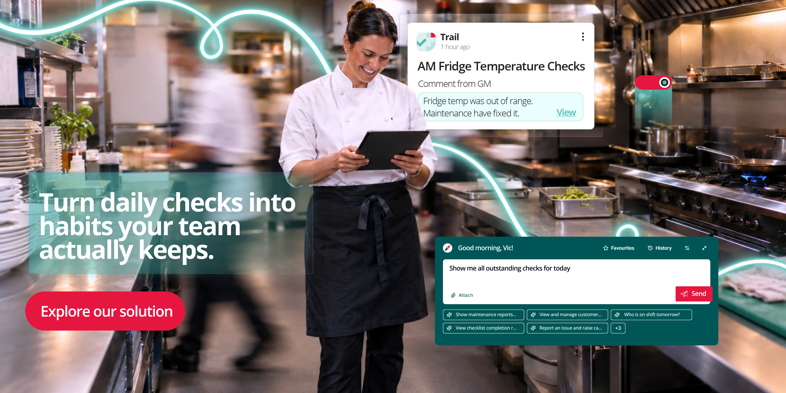
Trail assigns team members tasks, so everyone knows what they need to do and when to do it. You can even attach photos and videos to tasks to instruct team members on how to perform the task. This way energy-saving becomes a habit.
Energy saving tips for restaurants
1. Clean and service your equipment
Is your equipment working harder than it needs to be? Cleaning your equipment and servicing it regularly can help you make energy savings.
Start by checking your fridge—the condenser coils in the unit can become clogged with dust, preventing them from expelling heat. So your fridge has to work extra hard to reach food-safe temperatures. Which uses more energy.
2. Use energy-efficient equipment
If you clean and service your equipment and it still consumes a significant amount of energy, it might be time to switch to more energy-efficient equipment. While there is an upfront cost associated, it will reduce the energy bills in your restaurant in the long term—using an energy-efficient dishwasher can save you on average £1,500 every year.
3. Turn off appliances
If a kitchen extractor is left on overnight, it can waste up to 10 tons of carbon! By making a small switch, you can save (literally) tonnes of energy! Turning off equipment and regulating your heating during quiet times of the day (between lunch and dinner service) can help you make savings.
With Trail for restaurants, you can assign tasks to the right person at the right time, reminding them to turn off equipment.
4. Change your kitchen layout
Your kitchen layout can affect the efficiency of your equipment. If your fridge is next to the oven, for example, it will have to work harder to expel hot air and cool down.
Energy savings tips for pubs
Reducing your pub’s energy consumption doesn’t have to mean compromising the quality of your offering. By adopting these seven straightforward tips, you can make a real impact on energy costs:
1. Use timers and sensors
Timers and motion sensors for outdoor heating and decorative lighting might come with an additional upfront cost, but they pay off by making sure lights and heating are only on when they’re needed. Many models are easy to install and can be integrated seamlessly into your existing setups, which makes them a no-brainer if you’re looking to save on your energy bills.
2. Optimise refrigeration systems
Regular maintenance is often overlooked due to busy schedules. But setting a daily cleaning checklist can help ensure your refrigeration systems are operating efficiently. Look for signs of wear and tear. If your equipment is several years old, it may be time to assess its efficiency. A simple evaluation of energy bills can reveal if your current units are costing more than investing in an upgrade.
3. Invest in energy-efficient cooking equipment
Cookers and dishwashers over a certain age can be drastically less efficient than newer models. Upgrading to energy-efficient models not only reduces energy consumption but often improves cooking speed and quality. Use your Trail app to create a timeline for assessing equipment age and efficiency, making it easier to budget for upgrades.
4. Reduce energy usage in dishwashing
Energy-efficient dishwashers are crucial, particularly because the dishwasher needs to reach the correct temperature to clean dishes effectively. Regular scheduled cycles and dishwasher checks can help you keep your dishwasher running effectively and avoid running too often or when not filled. Additionally, if your dishwasher is older than 10 years, consider checking its energy efficiency rating—upgrading may be more beneficial than you think.
5. Implement best practices for cellar cooling
Properly maintaining your beer cellar is vital, yet it can be easy to overlook. Make sure you’re carrying out regular cellar checks of insulation and ventilation. If your cooling systems are outdated, they may be working harder and consuming more energy. Conducting a simple efficiency review with Trail for pubs and bars can help determine if an upgrade is warranted.
Energy savings tips for hotels
1. Control water heating
Setting water heaters to a maximum of 60°C means you can save energy while still staying compliant and meeting health standards (Legionella bacteria can multiply in water between 20–45°C, but it doesn't survive above 60°C). Well-insulated pipes also help minimise energy loss.
2. Turn off standby devices
Devices left on standby consume unnecessary energy, so use smart plugs or power strips that automatically cut power to these vampire devices to save you money and reduce energy consumption.
3. Engage guests
Make energy-saving a team effort. Encourage guests to opt out of daily linen changes with printed material in their welcome pack, or on discreet stickers on bathroom mirrors – this can trim laundry energy by 15-20%.
4. Install low-flow fixtures and toilets
Low-flow showerheads, faucets, and toilets reduce water usage, which in turn lowers the energy needed for heating water. Low-flow showerheads reduce the amount of water used by half but retain the feel of a normal shower. Simply changing these fixtures can significantly reduce water consumption without affecting guest comfort.
5. Use window films and blinds
Installing window films or using blinds can reduce heat gain during summer months, leading to less energy being used for air conditioning. In winter, they help retain heat, cutting down on heating costs. Research has shown that energy-saving window film can reduce the energy used for cooling by up to 35%.
6. Upgrade to energy-efficient appliances
When replacing appliances such as refrigerators and TVs, opt for energy-efficient models. A-rated appliances use less energy, resulting in significant long-term savings.
7. Use real-time monitoring and predictive maintenance
Don’t wait for equipment to break down before taking action. Heating, ventilation and kitchen systems often show small warning signs before they become costly failures. Predictive maintenance means spotting those early, like unusual temperature readings or higher-than-normal energy use, and fixing issues before they spiral.
With Trail for hotels, teams can log routine equipment checks and capture anomalies as part of their daily tasks. That way, you’re not just reacting to breakdowns, you’re preventing them, saving both energy and repair costs while keeping the service running smoothly.
Trail’s sustainability pledge
Saving energy in hospitality is a win-win for everyone involved, and especially for our planet. With Trail’s sustainability pledge, we’re not only committed to helping improve energy efficiencies in hospitality, we’ve also taken a pledge to plant 500,000 trees by 2030. Take a look at our sustainable hospitality guide to find out more about what you can do to become more sustainable.