Who’s impacted by food waste regulations, and what’s changed for hospitality businesses?
The new food waste regulations will affect a wide range of hospitality businesses, including:
-
Restaurants, cafés and pubs
-
Hotels and B&Bs
-
Caterers and event venues
-
Fast food outlets and takeaways
-
Food courts and service stations
-
Staff canteens and institutional kitchens (e.g., hospitals, schools, universities)
What do the food waste regulations meant for hospitality businesses?
The food waste separation requirements are providing some unique challenges for hospitality businesses.
-
Generating more food waste - Food businesses such as restaurants, hotels and caterers generate significantly more food waste daily than many other businesses, resulting in a greater operational and financial impact.
-
Food waste from more than one place - Unlike offices or retail businesses, hospitality venues produce a mix of edible and inedible waste such as plate waste, food prep scraps and unused stock that makes tracking and separating food waste trickier.
-
Storage and logistics issues - As businesses must store food waste separately, this may require additional thinking around bins, space and frequency of collections to prevent pests and odours.
-
Potential higher costs - Licensed waste carriers will charge for separate food waste collection and could increase overheads for hospitality businesses that already handle large amounts of waste.
How can you optimise food waste management in hospitality?
Now that your new food waste collections are in place, you might be learning just how much food waste your venues produce and be thinking about taking action.
We want to help operators take advantage of the new food waste regulations and turn it into a business win by shifting focus from compliance to efficiency, cost savings and sustainable business practices.
Here are 6 tips for hospitality operators to optimise food waste management practices.
-
Look at your menu
Your menu is the first step in reducing food waste. Take a close look at portion sizes - are they resonating with customers, or is too much ending up in the bin? In hospitality, around 40% of food waste is carbohydrates, including potato, bread, pasta and rice, (WRAP, 2020), so adjusting these portions can make a big difference.
-
Smart inventory management
A lot of waste comes from poor inventory management, with around 21% of food waste in hospitality coming from spoilage, (WRAP, 2020), either from stock going out of date due to poor rotation or over-ordering. Using restaurant inventory checklists and improving stock rotation can prevent spoilage and reduce unnecessary waste.
-
Be creative
There are lots of creative ways to reduce food waste in your venues, such as repurposing surplus ingredients into specials or staff meals to help minimise waste while keeping menus fresh and cost-effective. Using food scraps in soups, stocks or garnishes ensures that every ingredient is utilised to its full potential. Exploring food waste reduction services like Too Good to Go allows you to sell surplus meals, preventing unnecessary disposal while also attracting eco-conscious customers.
-
Train your teams
Your team plays a huge role in reducing food waste, so it’s important to provide training and tools to help them learn correct waste separation, efficient prep techniques and how to make the best recommendations to customers to reduce waste by offering to pack up leftovers.
-
Learn and improve
You can’t manage what you don’t measure. Track waste volumes to spot trends and identify issues as well as monitoring which menu items are generating the most waste.
-
Connect with your customers over sustainability goals
Customers care more than ever about choosing businesses that prioritise sustainable hospitality practices when spending their money. Make sure you communicate your food waste reduction efforts through menus, marketing and social media. Highlighting your commitment to sustainability reinforces brand loyalty and shows customers that your values align with theirs.
How can task management software like Trail help with waste management?
Getting your team on the same page about food waste management best practices and putting some consistent processes in place is the best way to create sustainable change.
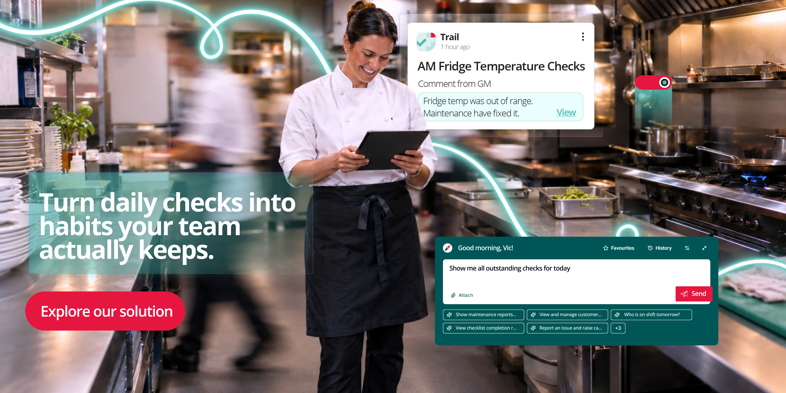
Here’s how Trail’s checklist app can help:
-
Automates food safety checks – Digital food storage checks work with your food safety management system to ensure consistent food storage, handling and hygiene to prevent spoilage and unnecessary waste. This will also help you when it comes to EHO inspections. Check out our kitchen audit checklist to make sure you’ve got everything ticked off you need to.
-
Streamlines inventory management – Trail’s inventory checklists track stock in real-time. Meaning less, over-ordering and less waste. Your team will also be able to better stay on top of expiry dates, selling what needs to be sold before it becomes scraps.
-
Standardises procedures – Assigns and automates key tasks like food prep and waste disposal to minimise errors. Meaning it’s taken care of before you’ve even had chance to think about it.
-
Improves team accountability – Assigns tasks, track completion and keeps everyone aligned on waste reduction efforts.
Time to take action with Trail?
With the 2025 food waste legislation now in place, hospitality businesses have the perfect opportunity to look at their operational processes and reduce food waste in their business.
In this article, we’ve looked at some practical and actionable ways you can start reducing food waste in your business. And, if you want a helping hand - maybe you should think about Trail for your business.